


INTRODUCING NORDICMODERN - VIBEKE KLINT RUG DESIGN & WEAVING LEGACY
Updated: Feb 27
Vibeke Klint (1927-2019) was of great importance to Danish textile art with its graphic rugs, textiles and site-specific decorations. She influenced multiple generations of modern weavers through her weaving room in Taarbæk, where she trained numerous textile designers and artists who have contributed to the field over the past 30 years.

Vibeke Klint began her career under the tutelage of weaving pioneer Gerda Henning, who taught at the Art Crafts School at the Art Industry Museum in Copenhagen. Before leaving in 1949, she was already linked to Gerda Henning's workshop. Following Gerda Henning's unexpected death in 1951, her husband, sculptor Gerhard Henning, offered Vibeke Klint the opportunity to take over the weaving room in Denmark, if she returned from France, where she was learning French tapestry techniques at the time.



NORDIC MODERN: A NEW BRAND WITH AN OLD SOUL
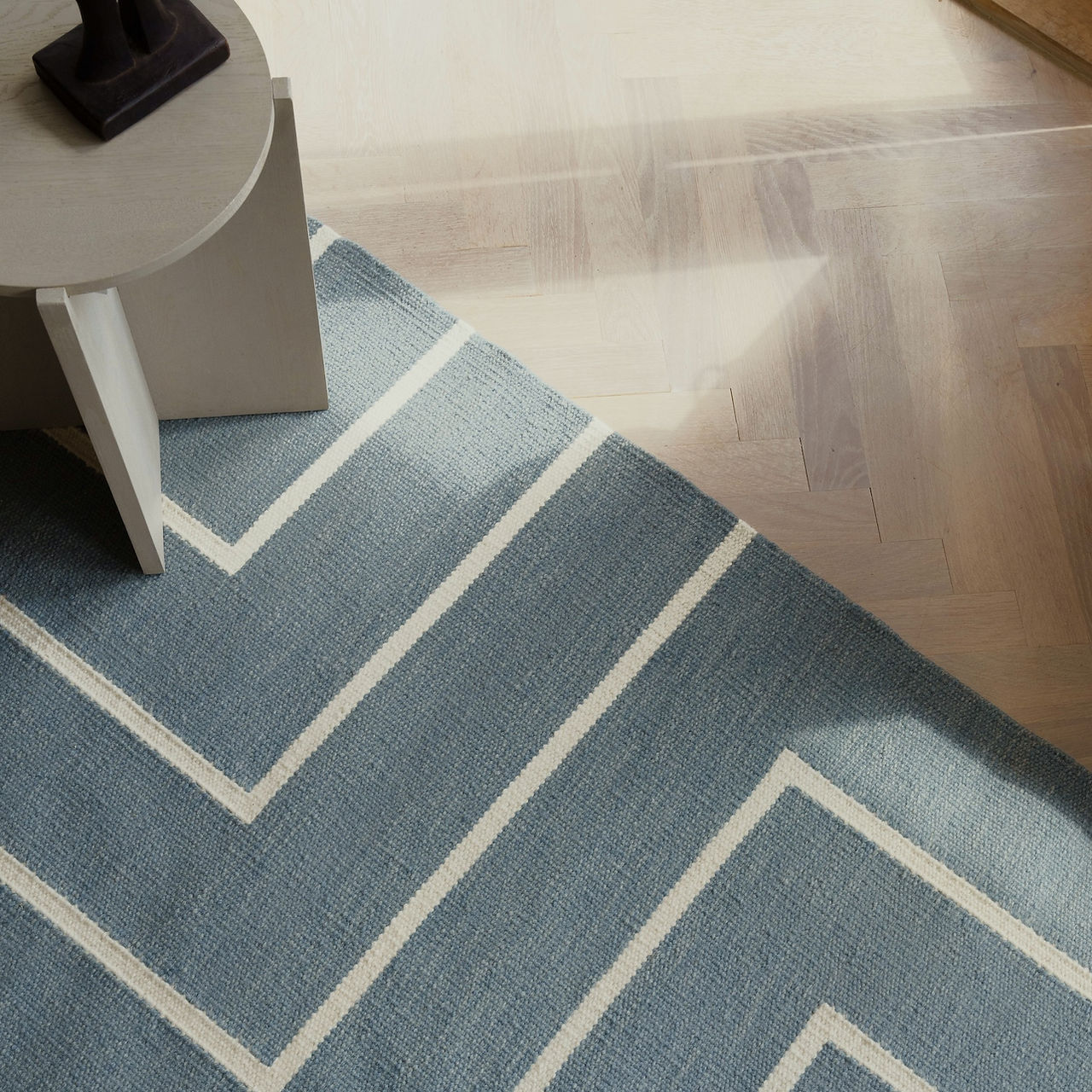
Vibeke Klint designs are reintroduced using her signature weaving techniques and patterns.
Each rug design has a unique story and background for the time and place it was intended for, whether public or privately commissioned.

Through the Henning family, Vibeke Klint met her future husband, landscape architect Morten Klint, son of the renowned architect Kaare Klint. In early 1957, the Klint family moved into their house in Taarbæk. This house served as both the family's private residence and Vibeke Klint's weaving studio, where she worked with her team of weavers until 2008. Many weavers recall a warm, familial atmosphere at Klint, which likely contributed to why many of them remained associated with the workshop as freelancers long after graduating.
WORKING LIFE, CRAFTS AND DESIGN
Vibeke Klint's professional legacy is immense. Her strong work ethic, the professional community, and the welcoming atmosphere in the weaving room have contributed to her remarkable career. This includes a diverse range of unique carpets and home textiles, as well as site-specific decorations for meeting rooms and notable buildings, such as concert halls, embassies, ministries, and churches—all designed with independent color choices and precise proportions.

ABOVE: the braided linen detail on the VK-1 rug designed in 1980 for the National Bank of Denmark
Her work stands out for its ability to connect art and architecture, blending craftsmanship with tactile elements, and merging tradition with modernist innovation. Her signature style is defined by simple geometric shapes, sharp angles, and clean lines, with yarns in highlighted, shifted, or muted hues. Vibeke Klint's visual approach focuses on nurturing the beauty of minimalism, emphasizing the courage to make choices and maintain direction in colors, patterns, and techniques. Her reliable aesthetics and remarkable body of work have significantly influenced both the present and future in preserving and advancing craftsmanship and weaving traditions for generations to come.
"The woven rug must be both flexible, firm and dense, so when it gets walked on, it will become prettier and prettier. You should rather not be upset that carpet is worn, but instead they rejoice and discover the new color experiences stored in the yarns and which appear in connection with the wear. "- Vibeke Klint

"My woven designs are primarily made for walking on. I'm not trying to convey an artistic message through my designs, it is their decorative effect that matters. I don't feel stepped on because you walk on the rugs, that is what they are meant for. "- Vibeke Klint
Vibeke Klint was honored with numerous awards throughout her career. One of her earliest accolades was a silver medal at the Milan Triennial in 1954. She received the Lunning Prize in 1960, the Eckersberg Medal in 1972, Knud V. Engelhardt's Legat in 1978, the Annual Prize of the Crafts Council of Art in 1987, and the C.F. Hansen Medal in 1989. In 1992, she was awarded the National Bank Honorary Garnet and Ole Haslund's Artist Fund. She received the Swedish Prince Eugene Medal in 1996 and Lis Ahlmann's Legat in 1997. In 2000, Vibeke Klint was appointed Knight of Dannebrog by Queen Margrethe II.

In 2020, a year following Vibeke Klint's passing, weaver Gitte-Anette Knudsen, who worked with Klint from 2003 to 2008, authored The World of Vibeke Klint. The book details Klint's 50-year career and, for the first time, showcases several of her sketches, watercolors, and weaving tests, offering a comprehensive, professional, and empathetic view of her working methods.


